

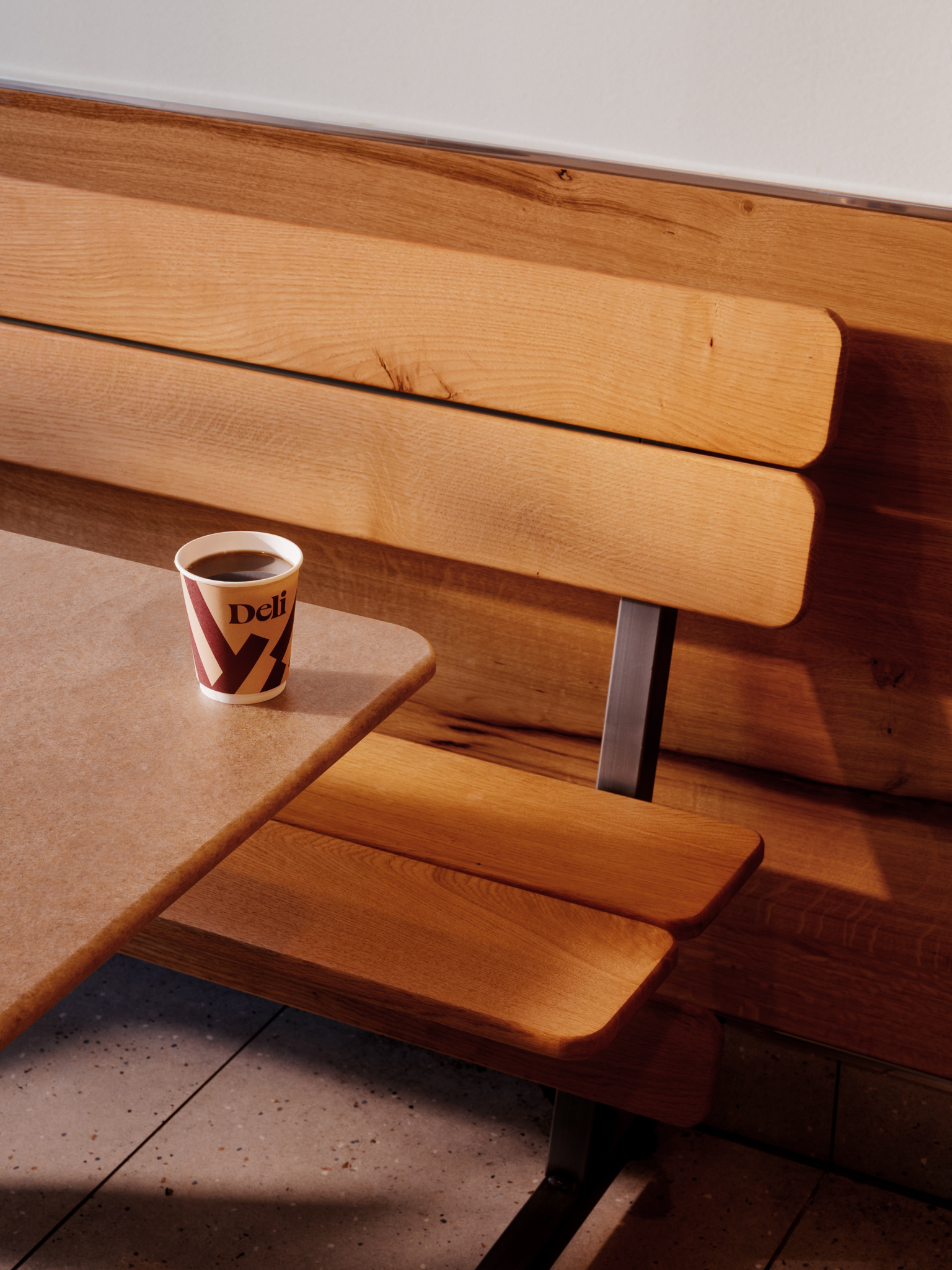

The ambition was to create a unified brand ecosystem in which identity and space developed in parallel. By carefully translating the graphic language into material, architectural, and spatial form, the project merges the consumer’s digital and physical experience into one cohesive and recognisable environment. Even elements such as the coffee cup and cafe table are conceived as a deliberate pairing, designed in dialogue rather than as isolated objects.
As a whole, the interior concept introduces a softer, more natural material palette defined by warmth, tactility, and lasting durability. Solid oak surfaces meet the customer at the primary point of contact, the counter, establishing an immediate sense of quality and permanency. This is complemented by bespoke solid oak furniture and blackened steel elements, while the primary counter front is crafted from highly textured deep burgundy recycled plastic, made entirely from repurposed food packaging waste.

To shift the perception of Deli from a purely functional kiosk into a more flexible and welcoming destination, the seating areas were given special attention. Expanded seating zones, integrated window seating, and warm material transitions aim to encourage longer dwelling times and support a broader range of use, from quick daily purchases to lunch stops and other moments of pause throughout the day and evening. Carefully integrated Scandinavian-designed furniture and lighting in oak, aluminium, and raw steel help the space to feel both contemporary and enduring.


In the baking zones, the kitchen opens to the public through oak-framed glass walls, offering a direct view of the authentic stone oven where pastries and pizzas are baked in-house. The intention being to integrate production into the interior itself, bringing the on-site preparation into clear sight. Warm white tiles with red grout form a playful backdrop to this transparency, drawing focus to the care and freshness of the products displayed within the glass counters.
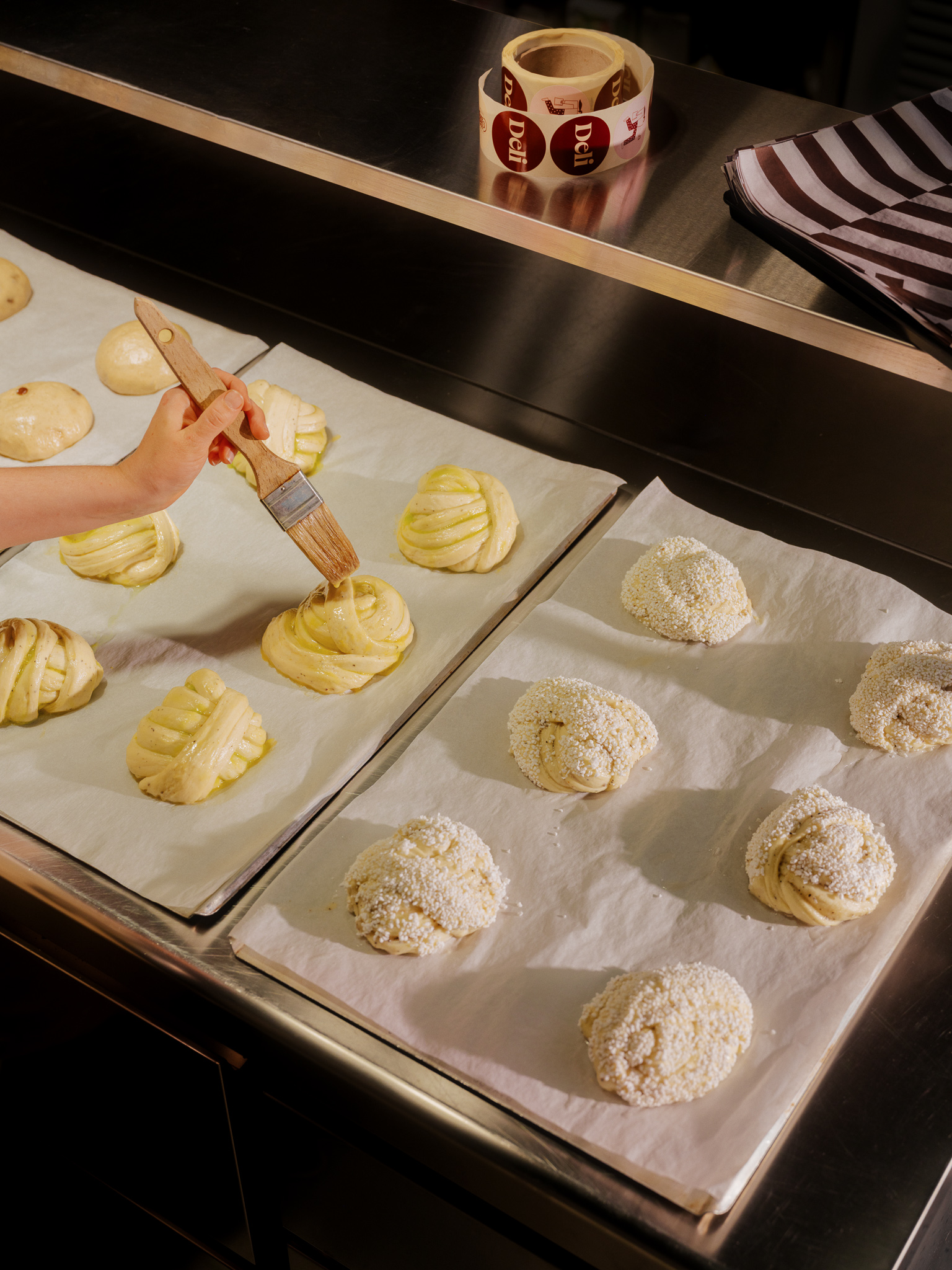

In general, the visual identity becomes an integral spatial layer throughout the interior. Illuminated light boxes, integrated menu displays, and laser-cut wall illustrations activate surfaces and provide moments of brand storytelling. Rather than applied graphics, these elements are embedded architecturally; forming part of the physical fabric of the space in a playful manner.

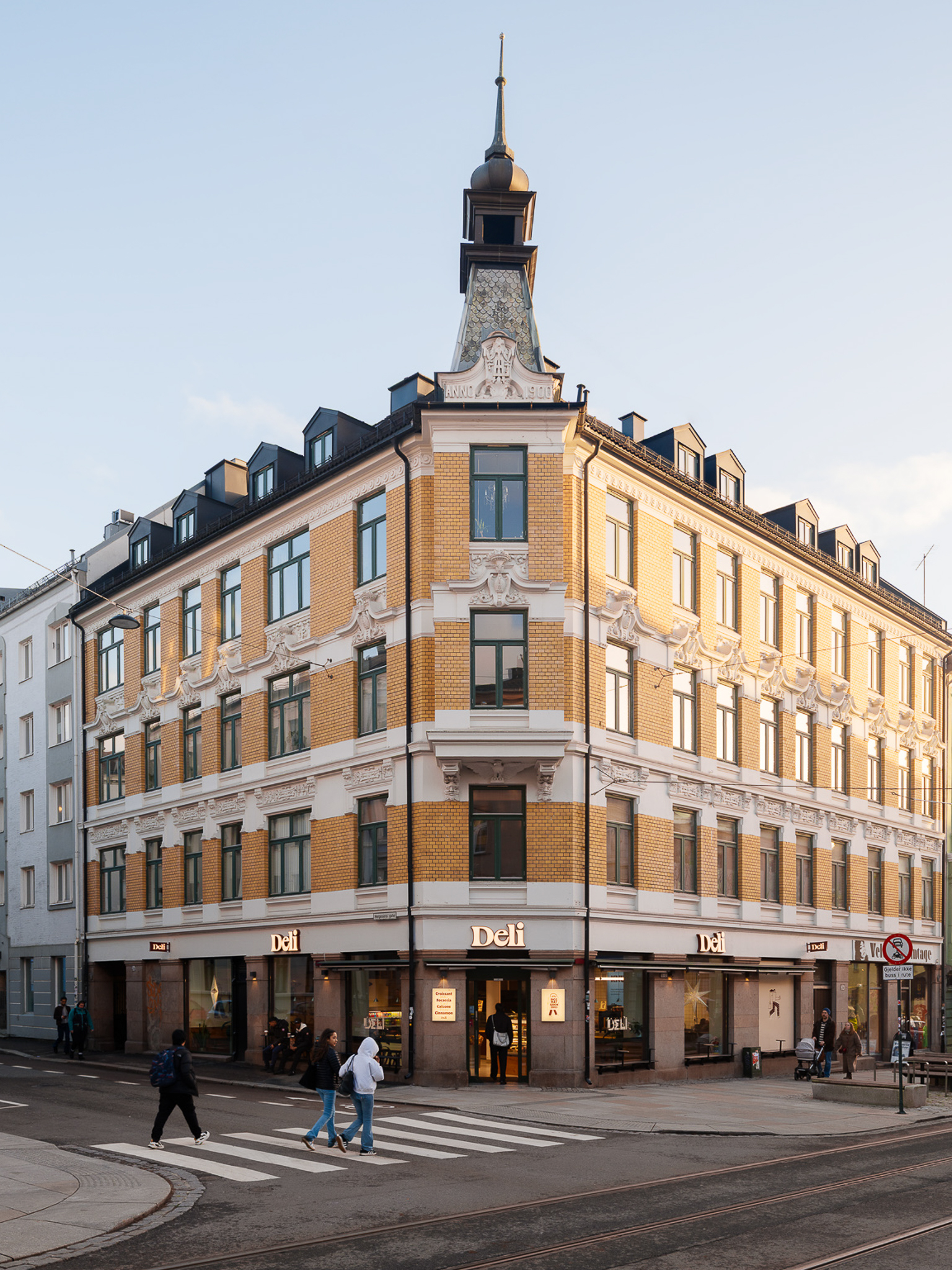
Externally, outdated façades were revitalised with bold signage with integrated lighting, strengthening visibility and establishing a clear and contemporary street presence. It is here too that window bench seating in black marbled recycled plastic and tables are integrated into the street window alcoves. The result being a consistent and recognisable brand expression across both interior and exterior touchpoints. With just as much care outside as for the inside.

Developed in continuous and close collaboration with Bielke & Yang, the project was conceived as a holistic and integrated process. Identity, materiality and spatial choreography were developed simultaneously, allowing each discipline to inform the other from the outset. This approach ensured that typography, colour, material and architecture operate as one unified system; creating a cohesive and scalable spatial concept for the future evolution of Deli.
